Posted October 27, 2026
Condensation trapped between glass panes is one of the clearest signs that double glazing has failed. You might also notice cloudy glass, cracks or rooms that are becoming harder to keep warm.
But not every window problem means the double glazed units themselves have failed. Draughts, sticking windows and worn seals can have different causes, some of which are relatively simple to repair.
Knowing what to look for can help you work out whether the glass needs replacing or if the problem lies elsewhere.
Double-glazed units contain two panes of glass separated by a sealed gap of dry air or insulating gas. Their edge seals can deteriorate over time, allowing moisture into the gap. Common causes include ageing, incorrect installation, physical damage and years of exposure to temperature changes and weather.
A failed factory seal generally means replacing the affected double glazed unit. A worn weather seal, faulty hinge or damaged frame is a different problem and may be repairable without replacing the glass.
The clearest signs involve moisture or damage within the sealed glass unit. Other symptoms, such as draughts, can come from the frame, seals or window fittings.
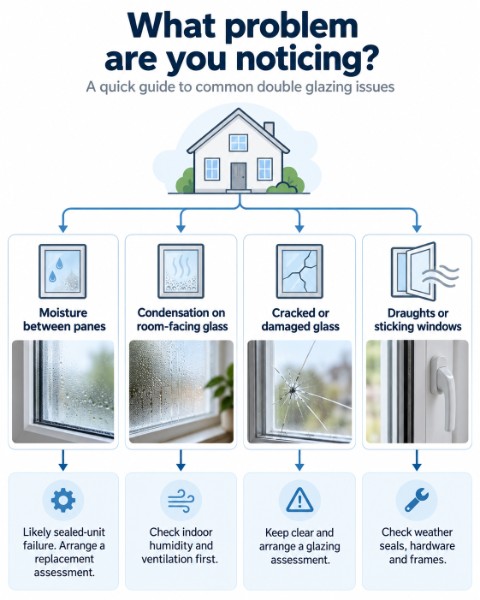
Moisture between the two panes is one of the clearest signs that the sealed double-glazed unit has failed.
When the edge seal breaks down, moisture can enter the cavity and form condensation that you can't wipe away.
The Windows & Glass Association NZ confirms that condensation forming between the panes under normal conditions indicates the insulated glass unit has reached the end of its useful life.
How can you tell where the condensation is forming?
Try wiping the accessible glass surfaces with a dry cloth.
| Where the moisture appears | What it usually means |
|---|---|
| Inside surface, facing your room | Often caused by indoor humidity and a cold glass surface |
| Outside surface | Can occur naturally on well-insulated windows |
| Trapped between the panes | Strong indication that the double glazed unit has failed |
Check where the moisture forms before assuming the glass needs replacing.
If condensation is occurring on the inside surface (facing your room), improving ventilation may help. EECA's guide to reducing dampnessexplains how indoor humidity contributes to condensation and mould.
If your windows still look misty after cleaning, the cloudiness may be trapped between the panes.
When moisture enters a failed sealed unit, it can leave a cloudy appearance, streaks or deposits on the glass surfaces inside the cavity.
Unlike ordinary dirt or surface condensation, these marks can't be removed through normal cleaning.
The fogging may come and go depending on temperature and weather conditions. Over time, the glass may develop a more persistent haze.
What should you do?
Check whether the cloudiness is on an accessible surface. If it appears trapped inside the unit, arrange a glazing assessment.
Cloudiness and condensation can have the same underlying cause: moisture entering a failed sealed unit.
Cracks in either pane of a double-glazed window can compromise the unit and create a safety risk.
A crack in either pane needs attention even when there's no condensation.
A double-glazed window frame has different seals serving different purposes:
A worn external weather seal may be repairable without replacing the glass. A failed double glazed unit requires the affected glass unit to be replaced.
If your window has cracked or shattered, keep people away from the damaged area. Our guide to what to do when glass breaks after hours explains the steps to take while arranging repairs.
Yes. If the existing window frame is sound, a failed double-glazed unit can often be replaced without removing the entire window.
The replacement involves removing the affected sealed glass unit and installing a new one into the existing joinery.
| Problem | Possible solution |
|---|---|
| Condensation between panes | Replace the failed sealed glass unit |
| Cracked double-glazed glass | Replace the damaged unit |
| Worn weather seal | Repair or replace the affected seal |
| Faulty hinge or latch | Repair or replace the hardware |
| Rotten or badly warped frame | Assess whether frame repair or replacement is needed |
If the frames are still in good condition, retaining them can avoid unnecessary full window replacement.
For a wider comparison of keeping existing frames versus installing new joinery, read our guide to retrofit double glazing versus new windows.
If you're seeing condensation trapped between the panes, persistent internal fogging or cracked glass, it's worth having the affected unit assessed.
You should also seek professional advice if a window is leaking, won't close securely or has visibly damaged frames.
A glazier can check whether it's the glass, seals, fittings or frame causing the problem.
Noticed misting between your glass panes, cracked windows or draughts that won't go away?
Sharp Glass has supported Christchurch homes and businesses with glass supply, repair and replacement since 1973.
Our team handles everything from individual double-glazed panels to commercial glazing replacements, with the equipment and experience to assess different window requirements.
Before replacing your entire window, find out what actually needs fixing.
Contact Sharp Glass for a free, no-obligation double glazing repair quote.
There is no single lifespan for every double-glazed unit. The Windows & Glass Association NZ notes that lifespan varies with the unit's design, installation, maintenance and environmental exposure. Double glazing can outlast its warranty period, but it isn't designed to last indefinitely.
Replacing 20-year-old double glazing can be worthwhile, but it isn't always necessary.
Glass technology has improved significantly over the past 20 years. Modern high-performance double glazing can provide better insulation, help reduce unwanted solar heat and make your home more comfortable year-round compared with older standard glass.
If your existing windows are still in good condition, there's no immediate need to replace them. However, upgrading could be worth considering if you're looking to improve your home's comfort and energy efficiency.
Yes. A glazier can replace the failed sealed glass unit while retaining the existing frame. This depends on the condition and suitability of the joinery.
The price depends on the size of the glass, its specification, access requirements and whether the repair involves the sealed unit, hardware or window frame. Sharp Glass can assess the damage and provide a quote for the required work.
No. Condensation on the room-facing surface is often caused by indoor humidity meeting cold glass. Moisture trapped between the panes is a much stronger indication of sealed-unit failure.